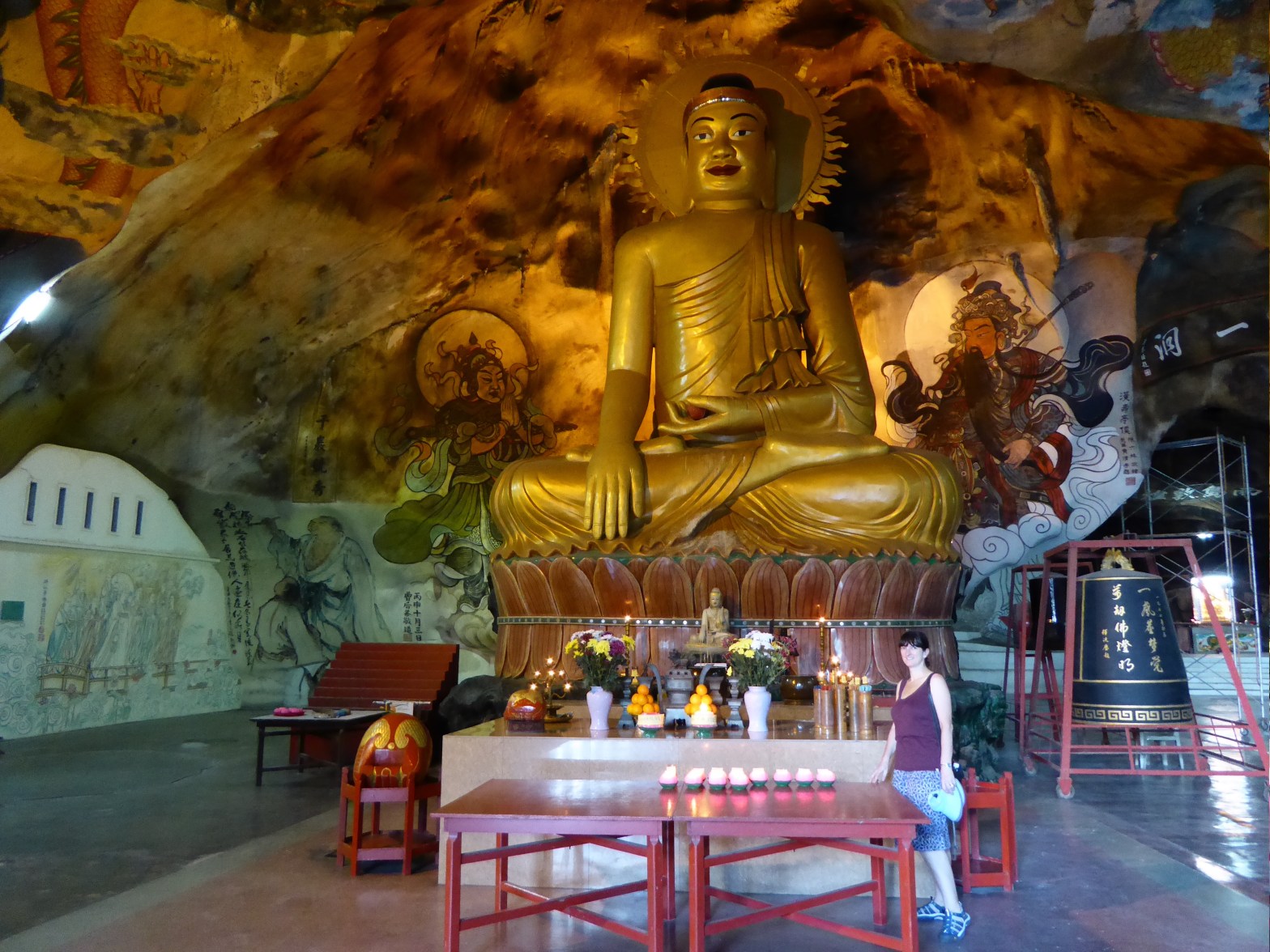
Ipoh. Famous as the birthplace of White Coffee, Famous for Dim Sum and surrounded by limestone hills hiding a plethora of temples in caves. How could we resist that combination…..
Kuala Lumpur
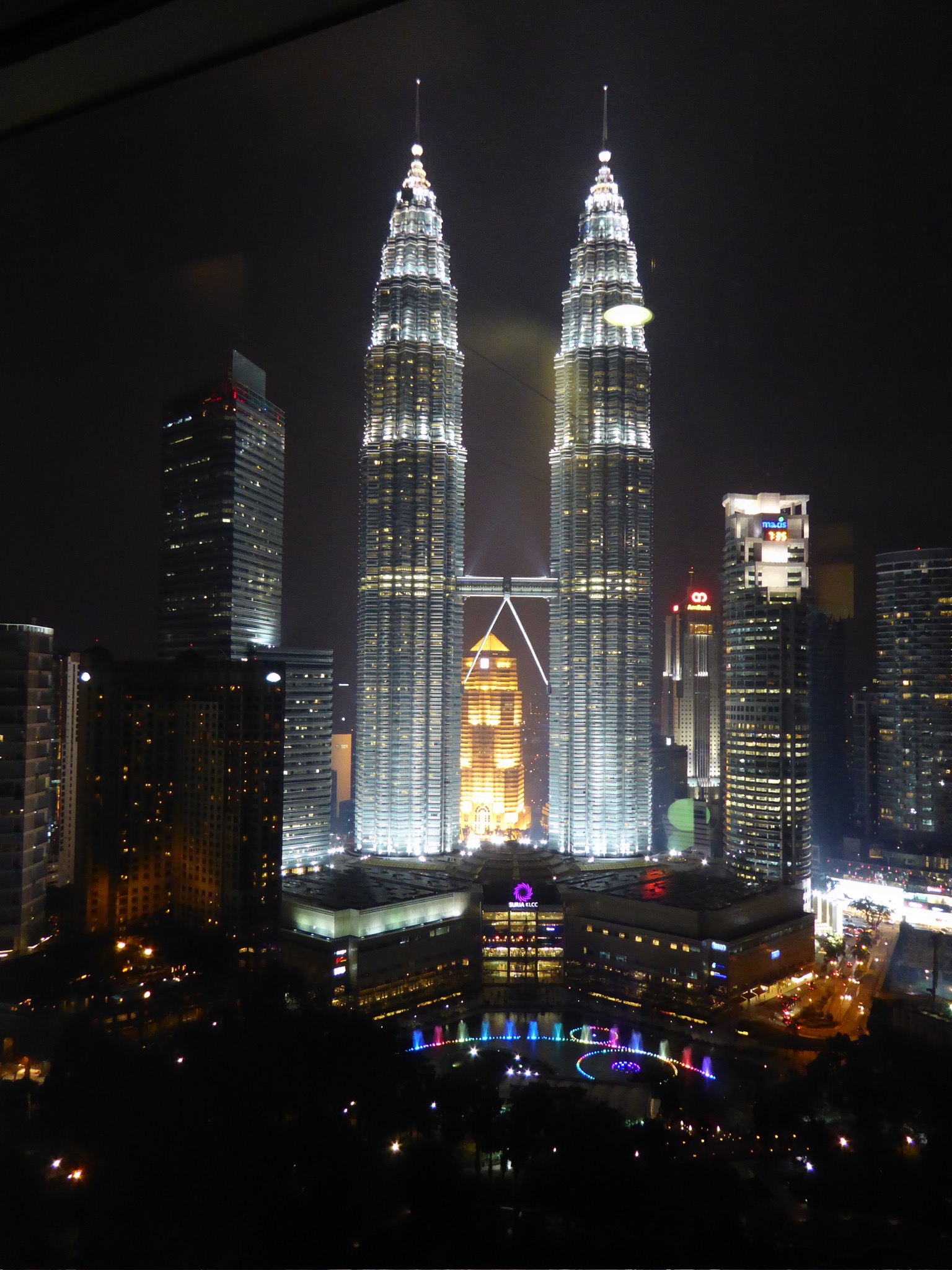
This visit is mostly about the food and we promised ourselves not to eat the same thing, or visit the same eating place twice. A promise that is broken almost immediately…..Continue reading “Kuala Lumpur”
We are off…….

My very favourite sandals, too worn out to come on our next trip. They have been around the world twice already…..
Travel with a bucket-list ?
Three months to our departure date to South East Asia. A bucket-list in the planning stages.
Sensational Santa Rosa Lake – Madidi NP

Our last day in the Amazon and saving the best for last, we decide to take a boat ride further upriver to Santa Rosa lake.
Marvellous Madidi – Amazon at last

After a couple of days in the jungle town of Rurrenbaque we travel 4 hours by motorised canoe up the River Beni to Madidi Jungle Ecolodge deep in the Madidi National Park.


We stop briefly to register our presence at the park HQ, presumably so they can account for us if any are swallowed by an anaconda, a jaguar or anything else that inhabits this place!


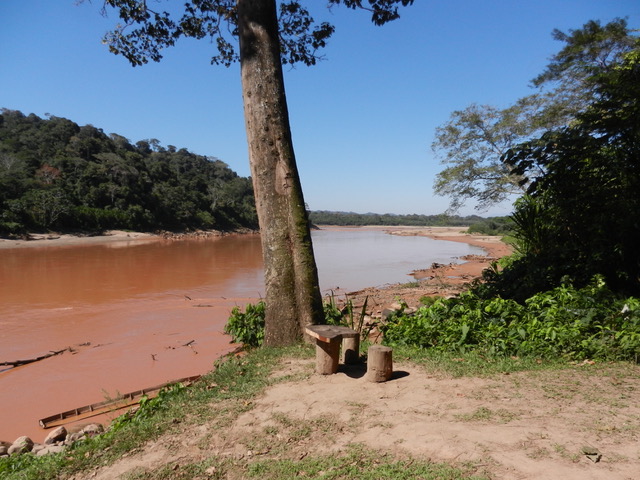
Entering the park through a gorge in the mountains is reminiscent of that described so vividly in Conrad’s amazing “Heart of Darkness”. In the distance we can see the foothills of the Andes which mark the western boundary of the Amazon Basin. Between us and the mountains there is nothing but rainforest and river.


Madidi NP remains one of the most untouched and bio-diverse places on the planet. Of all the rainforest wilderness areas we have visited, Madidi takes the prize as the most unspoilt and pristine.
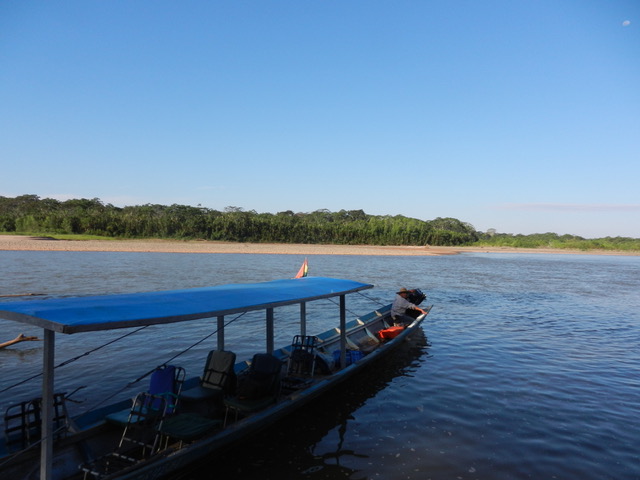

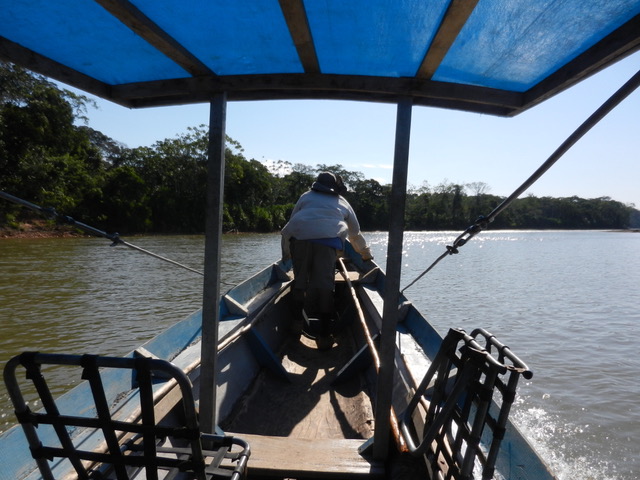
Meandering upriver, the forest seems to go on forever. We see very few other people and feel very privileged to be in such isolation. It is the dry season and water levels are low, so our boatman has to wind our large motorised canoe expertly through the shallows, directed by his navigator sitting in the bows who directs him using barely perceptible hand signals.


In places the water is too shallow for the outboard to operate so we use poles to punt through. In one part the water is too shallow for even that, so we get out and walk a while.
In the wet season he river level rises by up to 3 metres causing the width of the river to increases from 50 metres to over 300 metres.
We pass giant trees semi submerged in the river where they have been washed away in previous seasons.

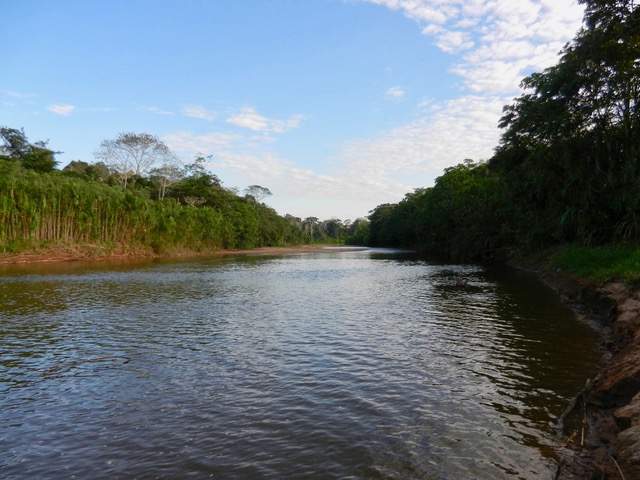
We are surprised is how cold it is. The sun is shining but we are wrapped up in fleeces and jacket as it is so cold on the river. The weather seems to fluctuate between very hot (30c) and very cold (10c). Thankfully the humidity is low.
It is incredibly relaxing just to sit and watch the rainforest slip by, although there is excitement as a family of wild pigs swim across the river. The boatman stops a while to let us watch as the three pigs, mummy pig, daddy pig and baby pig, swim across the fast moving river. It is touch and go for a while but all three eventually make it only for baby pig to go off in an entirely different direction from mum and dad!
Eventually we arrive at our camp marked only by a giant tree trunk on the bank used as a landing stage. We are greeted by our guide, Raoul who shows us around the camp which comprising of two bedroom huts, a shower block and building for cooking and dining. It is basic, but very comfortable and very well run by the San Jose community who run and own the other lodges in the park.


After lunch we set off with Raoul for our first 3 hour walk into the jungle along one of the dozen or so trails which lead out from the lodge. Our first task is to learn to walk quietly so as not to frighten away the animals. Not easy given that the forest floor is covered with leaves, twigs, branches etc. but gradually, over the next few days, we manage to get the hang of it.
Unlike, Africa where the animals are abundant and are found on wide open plains, spotting the wildlife here is a lot more challenging. We watch and learn as Raoul showed us how to identify and find the animals usually by sound, sometimes by smell and finally by sight.
Sighting the animals, exciting though it is, is not the main reason for coming here. Just being able to walk in one of the few, virtually untouched, areas of rainforest in the world is a privilege. Just to stand and wonder at the incredible diversity of vegetation Is reason enough to come.
Over the next 5 days we get to walk in many different types of habitat. One area is the domain of the Howler Monkeys, another, the Capuchins hold court. The one thing they all have in common however, is insects! they are everywhere, particularly mosquitoes.
Raoul explains a little of his culture to us and how his community is spread out in settlements throughout the entire park, the furthest being some 9 hours upriver close to the Andean foothills. Communication between the communities is by shortwave radio at set times throughout the day. Some settlements have only got electricity (via generators) in the last year or two. All this adds to the feeling of splendid isolation, no telephone, no Internet, no post! All the supplies for the lodge are brought in by boat along with the guests from Rurrenabaque and all refuse is taken out the same way ensuring that the environment maintained in pristine condition.
Despite having to bring everything in by boat and cooking largely over open fires, the food here is the best we have experienced in Bolivia. This small, community run lodge could teach the rest of the Bolivian tourism industry a great deal on how to look after guests. Nothing is too much trouble and everyone we come into contact with has a smile on their face.
Before we set out on our first night hike, Raoul warns us to tuck our trousers (pants) into our socks so as not to allow any spiders etc. to creep into any places we wouldn’t want! We are also told to avoid brushing against the vegetation this which is home to some very large spiders and some enormous ants, both of which can inflict some serious bites.
The walk is short and only lasts and hour or so but even so, it would be impossible without a guide. 50 metres or so from the camp and I doubt we could have found it again as the forest is so dense and disorienting in the daytime let alone the night!
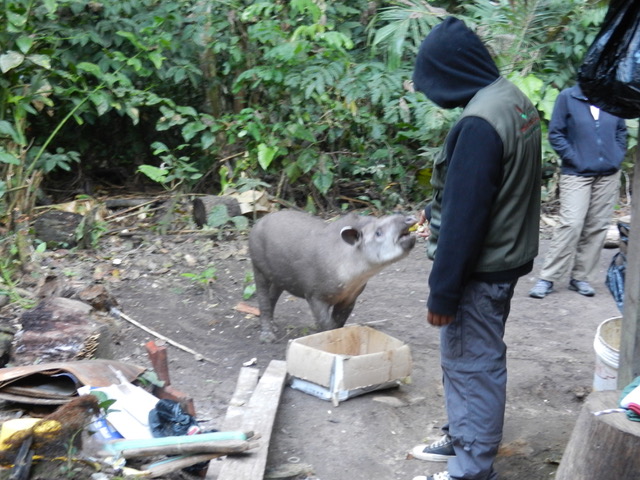
Camp guests would come and go but for our last two nights it was just the two of us, the staff and Antonio, the semi-tame Tapir the staff rescued from the river as a baby. Antonio is now a regular visitor to the camp. He would usually join us around breakfast time, creating havoc by running madly around the outdoor cooking area until he is given some bananas. He also returns at sundown as to join the staff for their evening swim in the river.


We spotted lots of animals during our hikes into the rainforest and trips on the river. The monkeys we stalked included Red Howler Monkeys, Brown Capuchins and Saddleback Tamarins, all completely different and all living in completely separate parts of the forest canopy. Raoul was able to find these mostly just by listening to them chatter far away in the forest canopy.


We also encountered many wild pigs (White Lipped Peccaries) which are found in herds of up to two hundred, usually by listening for the very loud sound of them crunching a particular type of nut, which at first sounded like a machine gun! On the riverbanks we came across Capybaras, the world’s largest rodent and a few pigs swimming as well some Brocket Deer.
The bird life is exceptional. We saw countless species of birds which apparently included :
Dusky Billed and Amazonian Parakeets
Blue and yellow macaws
Green and red macaws
Serary
Ringed Kingfisher
green Kingfisher
Stink bird
Orinoco goose
Orupendula
Grey black hawk
Snowy egret
Anhinga
Aracari
Guan
Red necked woodpecker
Black, King and Turkey vultures
Tropical king bird
Social flycatcher
Cormorants
Capped and white necked heron
Great tianoli
Swallow tanager
Parakeets
Our guide was able to identify all of these without batting an eyelid and would give us a rundown of the background of each species.
The more elusive animals who make Madidi home include ocelots, puma and jaguar. We were shown their hideouts in old tree trunks, but sadly not the inhabitants. Likewise, Armadillos we did see many of their burrows as well as evidence of anteaters digging holes all around the lodge in search of their prey.
Throughout our walks we would come across the “highways” created by the armies of leaf cutter ants carrying pieces of leaf 10 or 20 times their size to their nests. These highways were around 4 inches wide and often stretched for a very long way into the forest until they reached their giant nests. We were also shown the very poisonous giant ants, some 2 cms in length – the pain from the bites is excruciating and can last up to 9 hours.
Tomorrow, even further upriver to Santa Rosa Lake..
Rurrenabaque, Beni Department, Bolivia
Monday, August 19, 2013
 Accidental Nomads