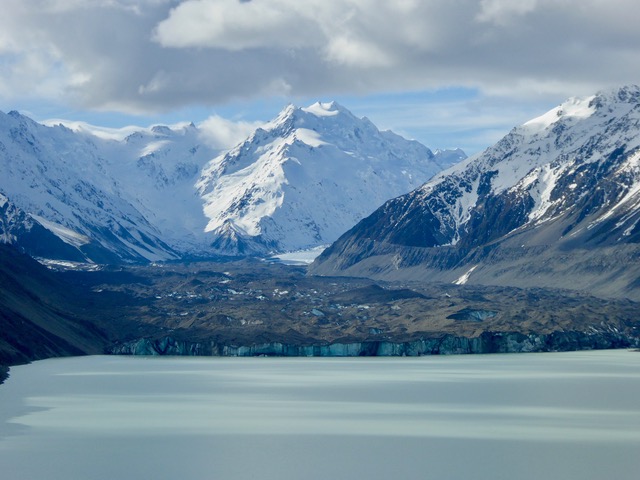
As we drive along the shoreline of the blue-green Lake Pukaki , the views of the snow-capped mountains of the Mackenzie Range mountains are just magnificent. We are heading to the stunning Aoraki aka Mount Cook.
Rainbow Reach to Lake Manapouri

The walk from Rainbow Reach to Shallow Bay is a but a small part of the Kepler Track, one of New Zealand’s “Great Walks”Continue reading “Rainbow Reach to Lake Manapouri”
Paradise & Good Luck at Phong Nha

The worlds biggest cave is 9km long, 200 meters high and so wide that a jumbo jet fit inside with space to spare. I read about this cave a few years ago when a joint British/Vietnamese team surveyed the whole cave system and published the most amazing photographs of the inside alongside the story of how the cave was discovered deep in the jungle by a local farmer. The photos inspired us both and so here we are in the Quang Banh region of Central Vietnam.
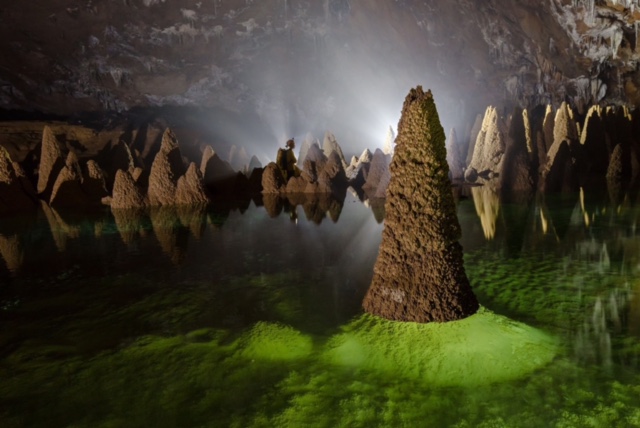
The cave, (known as Son Doong) is one of the many cave systems within the vast national park that protects the limestone mountains and jungle landscape.
Son Doong opened to the public in 2013 and it’s hard to gain access. There is a 12 month waiting list, a $3,000 fee and entry limited to 800 people a year. To get to the entrance is a 6 hour mountain trek and to explore takes a further 4 days hiking, climbing, caving and camping within the cave system which extends massively beyond the huge cavern to another 150 caves. That’s too hard core for us. We are here to see the cave system known as Paradise Cave and to explore a little off the beaten track in and around the National Park of Phong Nha-Ke Bang.
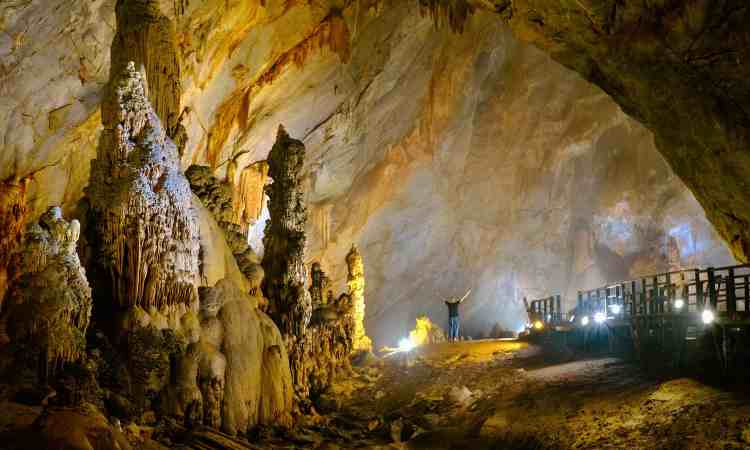
Paradise Cave, like Son Doong, is also a very large cave system – it extends 31km deep into the limestone mountains and has been open to visitors since 2010. Most people stay on the boardwalk which is an awe-inspiring 2km walk inside the cave, passing a multitude of differing rock formations, fossils, stalactites and stacalmites dating back an incredible 300 million years.
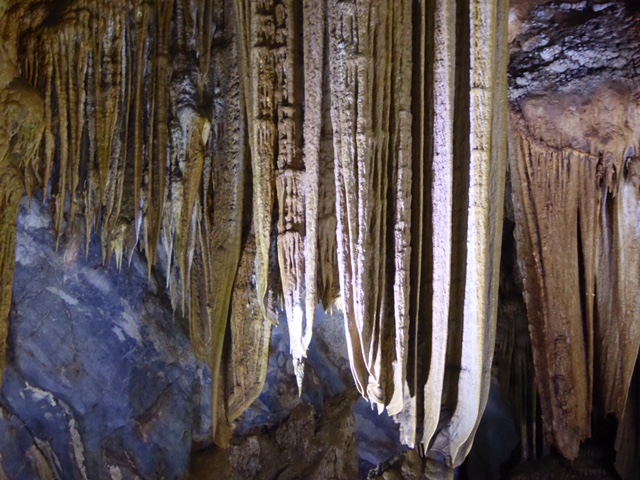
Despite the large number of people that troop down the steep wooden steps at the entrance (see below), the cave is so huge that literally hundreds of people all but disappear into insignificance once inside.

Paradise Cave is an incredible natural wonder. It has enticed many Vietnamese to visit and numbers of foreign visitors are now beginning to escalate. Much talk has been made of the 2km walk to the entrance, but electric carts now whizz you along. There is a climb up to the cave entrance, but this is a sloped path that winds back on itself as you ascend – the arduous part is the heat and navigating around the selfie photographers that stop every minute. Once inside it is much cooler. The strange and wonderful rock formations are mesmerizing in scale, from 10m in height up to about 80m, that people seem tiny and insignificant by comparison.

The amazing thing is that modern day explorers are still discovering new caves hidden in this diverse ecological landscape of karsts and primary forest. As new cave systems are being mapped and officially recognized, licenses are being granted for exclusivity rights to tour operators for commercial purposes.

Our next stop of the day was to one such exclusive cave. It also proved to be rather illusive, although not actually that far from the roadside. Clambering though a gap in the vegetation and down a steep dusty slope so treacherous that most, if not all, of the people in our small group lost their footings and either slipped a way down or landed with more of a bump. Next, a track through the jungle passes alongside several bomb craters in the ground, a not so subtle reminder of the Vietnam/American war. The Mines Advisory Group are still active doing brilliant work in making the area safe from unexploded ordinance from this time. This cave, named Hang Tra Ang, only became accessible less than a year ago.
I find it amusing Hang Tra Ang translates to Good Luck Cave and wonder who got to name the cave. The plan is to scramble over the massive boulders at the entrance of the cave and then swim 300m into the dark recesses of the cave. Clive is the more accident prone of the two of us and is not really that keen on long swims, so I am hoping good luck is on our side. First we must don a life jacket, hard hat and sandals. Luckily our sandals are good to go as the kiddy style jelly sandals provided only come in one size (Vietnamese XL= Small). The hard hats are builders style with a headlamp attached. The life jackets are attached by straps around and under us. Or at least they are supposed to, but most are too short to reach. We all look ridiculously funny.
Quite excited, we set off, wading through the fast moving stream. Climbing giant smooth boulders in swimwear and wet sandals is not easy, elegant or particularly safe. Excitement morphs into to deep concentration. More than a few expletives are being muttered nearby. Our small group do manage to make it over without incident and are gathered looking into dark water at the mouth of the cave. There is no option but to jump in and swim. One by one the headlamps disappear into the cave as a string of swimmers make progress against the current. The cold water takes our breath away.

I love it that we are last in and so get the full effect of the dark, silent waters. This is the most spectacular wild swimming I have ever done. I cannot stop grinning as I glide along with nothing but my headlamp to illuminate my way. I don’t want to catch up with the others, but it is inevitable.

The less confident swimmers are struggling midway as the effort begins to tell. The guide at the rear cannot swim, so is clinging to a route he knows. The life jackets do actually float so there is no danger of drowning. Clive is not having much fun as his jacket floats so much that is raises above his shoulders making it hard to move his arms and so he adopts a difficult backward seated sculling type movement. Nearly 300m inside the cafe there is a rocky outcrop that we are all expected to meet at. Once gathered, the headlamps go off and we sit in the complete darkness listening to the resident bats before trying an echo/shout out. Then it’s time to leap back into the water, and swim back, this time with the current helping us along a little. I love this so much I swim forwards and then swim back again to prolong this fabulous experience. Clive and a few others don’t seem to feel the same way, especially when we look at those giant slippery boulders at the cave entrance that we now have to climb, only this time dipping wet.
The remainder of our day included a stops at a memorial cave and a temple along the “Ho Chi Minh Trail” famous as key route from North to South Vietnam during the American War.
Many people expect something far grander of the HCM trail that what is actually here, which, in reality, is not a single trail but a series of well hidden pathways through the jungle. The United States forces tried unsuccessfully to obliterate the trail with sustained bombing campaigns making this the most bombed area in the history of warfare.
Tomorrow we will jump on bikes to explore more of the lush green countryside. It has been a very special day – I loved my ‘hat and shoes swim” in the dark. We both agree we will always treasure our visit to these spectacular caves.
We visited in June 2017. If you are traveling to Phong Nha and would like more information on travel, accommodation, tour choices and getting around, please contact us. We are in the process of compiling an information sheet.
credits : the photos marked with * are courtesy of Getty Images, the rest are our own.
Life on Lake Tempe

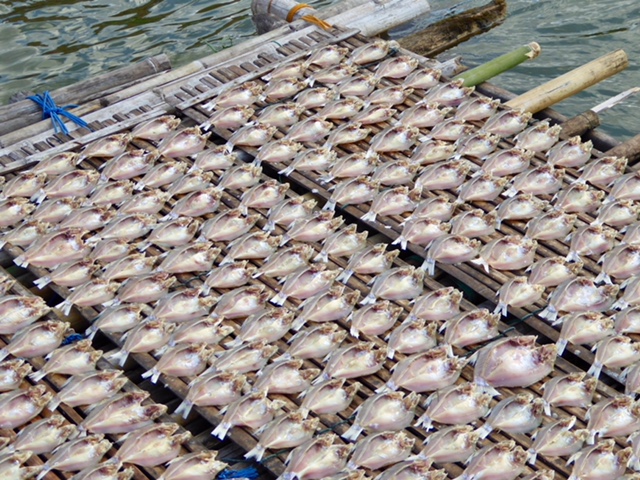
Lake Tempe is a very large lake in Southern Sulawesi which is home to hundreds of folk who make a living from fishing in the lake. They live in floating villages on the lake, they work, eat, sleep and go to school on the lake.
We arrived in nearby Sengkang, a historic and bustling market town on the shores of the lake, mid way between Tana Toraja and our destination of Makassar. It is the centre of commerce and culture in the region but still retains its traditional character. As well as being home to many old cultural traditions such as the very colourful bugis wedding ceremonies, traditional dance and silk weaving. A major fishing industry has now developed on the lake which is attracting investors from all over Asia.


At the quayside we board very carefully a narrow and precarious long-tail boat and cruise out through the maze of houses built on stilts around the shores of the lake. These boats are fast and I quickly realise I am sitting in the wrong seat as I am drenched to the skin within minutes!

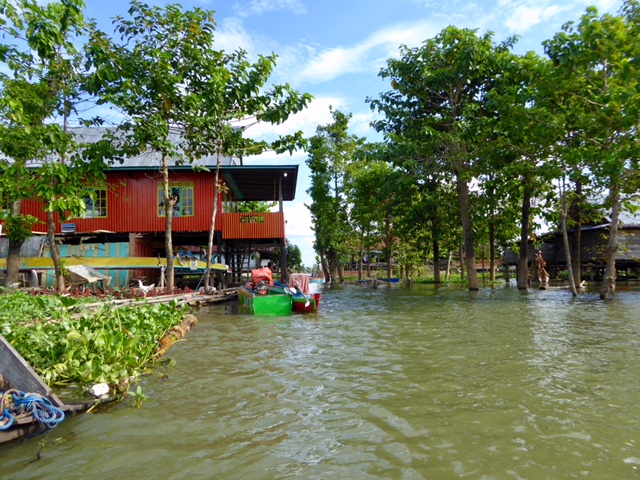

The houses are built on stilts because the size and level of the lake ebbs and flows with the coming and going of the rainy season. When the level rises the floors of the houses still remain above the water level, or at least they did until last year when they flooded for the first time!
After a short ride through this lakeland suburbia and passing by the huge mosque, we finally reached the lake proper. We continued through yet more water borne villages until we reached the open lake – it is massive!


Top of the goal posts


A huge number of bird species live here, a paradise for bird-watchers. In recent years there has been a problem here with invasive aquatic plants which are rapidly growing and choking parts of the lake; causing major problems for the fishermen and threatening their continuing way of life.


The Bugis people first started building floating houses on the lake in the 1980s to take advantage of the extraordinary fishing opportunities. More and more were built on the lake until there were several “villages” dotted around the lake.



We noticed that all the floating houses seemed to face the same way i.e. into prevailing wind. When the winds change, the houses all rotate in the same direction until the whole village faces in another direction. Houses are built on bamboo rafts and anchored by bamboo poles driven into the shallow lake bed. This way, each house remains stable in its location and its position within its village. When the lake level falls, homes on the edges are moved to the deeper centre and everyone’s neighbours get closer. Some residents we spoke to, told us that when they got tired of their neighbours, they just towed their house to another location and found new ones!
The bamboo rafts last for about two years before they need replacing, usually just by building another floor on top of the old which is left to rot away.
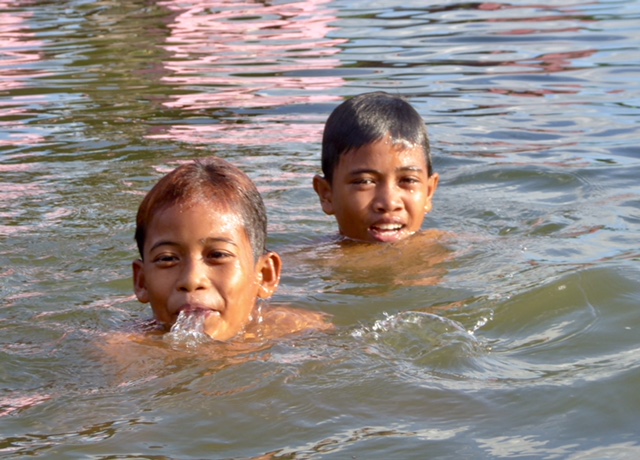
The lake is the life for these people. Whole extended families live in these floating houses. The men fish, the women shop at floating shops, mothers take their kids to the floating school, and then take their fish to the markets in Senkang. The toilets are boxes attached to the sides of the houses – “everything” drops down into the lake below. Drinking and cooking water is collected from the town but people swim, bathe and wash clothes in the lake.

Swimming seemed to be the main pastime of the kids although we did see a football field albeit under three feet of water but no doubt used in the drier times.
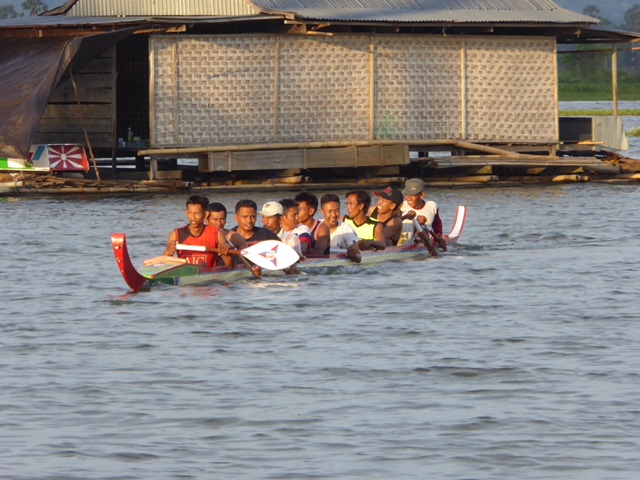
The people here are very hospitable. We were invited into one of the houses for tea and fried banana (Pisac Goreng) whilst we watched the villagers practice for the upcoming dragon boat competition.


As we sat there watching the sun go down we chatted with the family as best we could and were asked for yet more selfies by a group of visiting Indonesian students. We are beginning to feel like tourist attractions ourselves!


As we headed back across the lake, we were treated to a wonderful sunset. A perfect end to the day.
Tana Toraja – Fun with Funerals
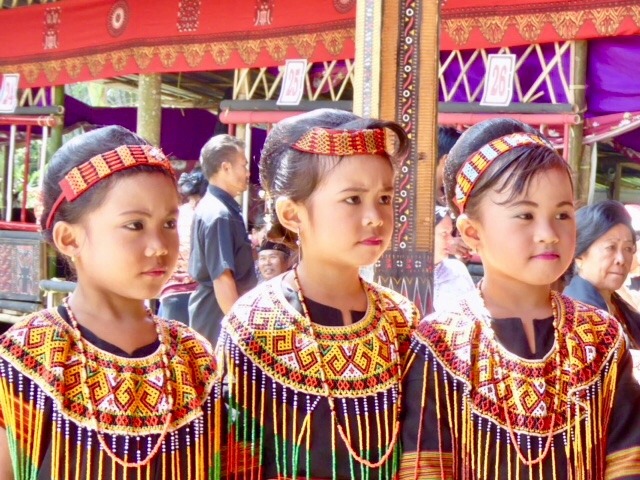
There is an air of excitement about town. A funeral is happening and we have been invited.
For the Torajans, the most important thing about life is death. Some of the most unique and complex burial rituals in the world are practiced here and I have to confess we are very curious about these famously elaborate ceremonies.
Ritha, a local Torajan tells us the funeral season is looked forward to by the whole community, a time to celebrate ‘The Way of The Ancestors”. As we set off for the day, Ritha keeps us enthralled about the traditions and beliefs of the Torajan people and we begin to understand that there is nothing morbid about death here.
“Our” funeral
It is odd to think that we are actually delighted to be invited to a funeral. My parents ask if we knew the deceased and the answer is no. The dead person, for whom we must purchase 200 cigarettes, died 4 years ago, aged 58. The funeral will last 5 days.
Living with the dead
As we drive though the countryside and villages of Toraja Land, many homes have what looks like a hastily made surrender flag white piece of cloth on a stick staked nearby. This is a sign that a deceased person is being kept in the home. Dead people seem to be everywhere! At least every 5 or so houses. The dead may not be breathing, but they are not referred to as dead until the funeral has taken place. Until then, they are “just sick”.
Meals are delivered to the body at mealtimes, they are talked to, washed and given a change of clothes. If the person was of importance within the village they may still be referred to for important decisions. The bodies are treated with chemicals so they don’t bloat or smell and don’t decompose. Many lie on their bed, the alternative is an open coffin in the main living area of the home, where they stay for weeks or months. Gradually they do mummify, for there is no time limit on how long the dead may live with the living. Five or more years not uncommon….It takes a long time to arrange a funeral!
Preparing for the funeral
“We live to die”, Ritha emphasizes again. “Nothing is more important than a good funeral”. Funerals are held June to October, and must be held in the originating ancestral village, regardless of where life was lived.
There will typically be hundreds of guests, perhaps 1000+, and many special bamboo structures need to be built for them. These hand built buildings are “one time use only” and surround the arena-like space where events will be held. Several coffins will also be hand made, as is a coffin cart, which will be hand painted and used only once. All extended members of the family must attend, which takes some organizing as many have distant relatives overseas. Relatives may also need time to save up in order to contribute financially if the deceased did not accrue enough during their own lifetime.
The Cost
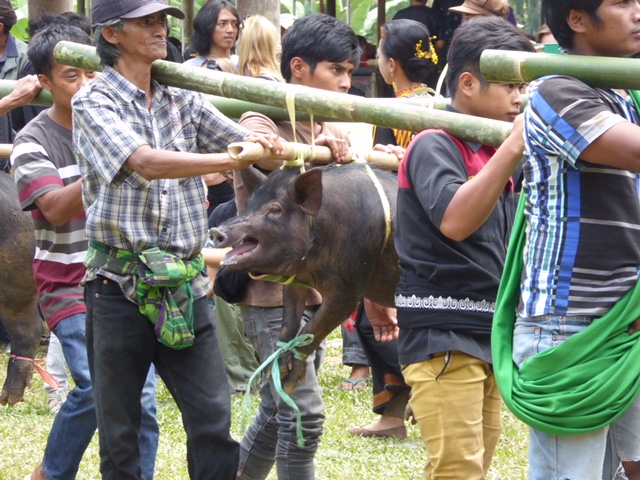
The culture throughout life is saving for death. Funerals are colossally expensive. Buffalos are a necessity for a funeral as these are sacrificed for the deceased soul and many are required. Buffalos are considered currency, a show of wealth, and are both highly prized and highly pampered. Prices start at around US$500 to buy in the market. A particularly good specimen could cost twice as much and an albino so much more again around $1,500-2,000. A tax is also levied on each sacrificial buffalo.
Ritha, still in her twenties, tells me she has been saving for her funeral since she started working. Her family have purchased a buffalo and rent land to look after it, in readiness for whichever family member needs it first.
Most families in the region are subsistence farmers and a single buffalo represents a massive investment, so it is understandable the reverence with which buffalos are treated. To have many buffalo is to be wealthy.
Sacrificial Buffalos
A funeral typically lasts several days, starting and finishing with buffalo slaughter. The ritual is rich with meaning. The belief is that first buffalo will release the spirit of both the deceased and the buffalo which will then carry the deceased on the pathway to the ancestors in the after-life.
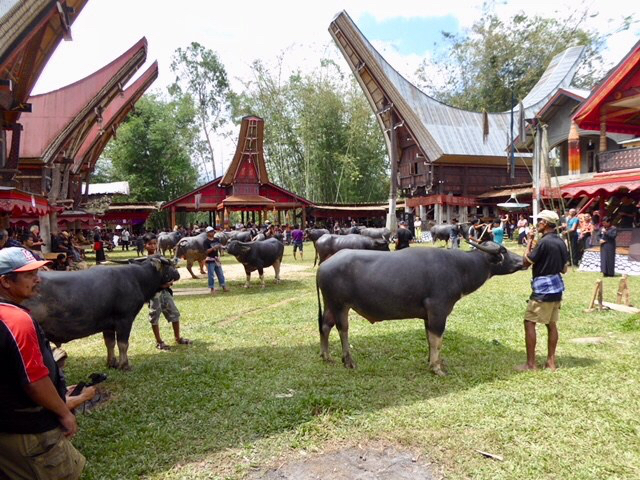
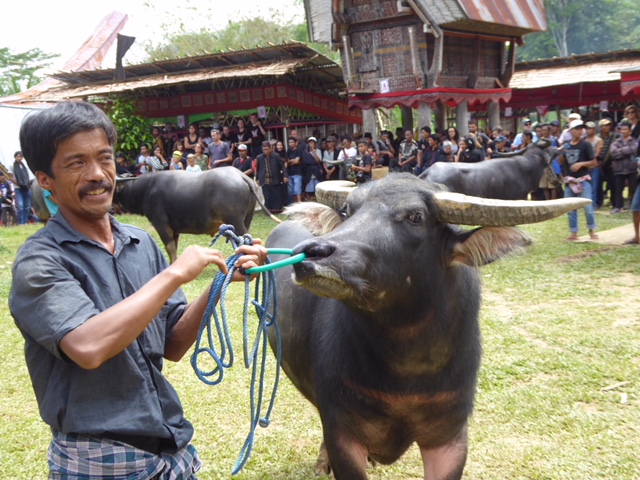
The slaughter was not fast, nor it seemed, painless and several attempts were made at slashing the throat of the tethered beast as it bucked.
Ritha says they will use a sharper knife on the others.
The remaining 19 buffalo will be slaughtered on the final day of the funeral. This ritual provides food for the spirit journey and wealth in the after-life, and for the living, a sort of food distribution system. The family of the deceased will decide how the meat will be divided among local families and community members. I think this is really good….but I am glad we will not be here to see the mass slaughtering, despite being meat-eaters!
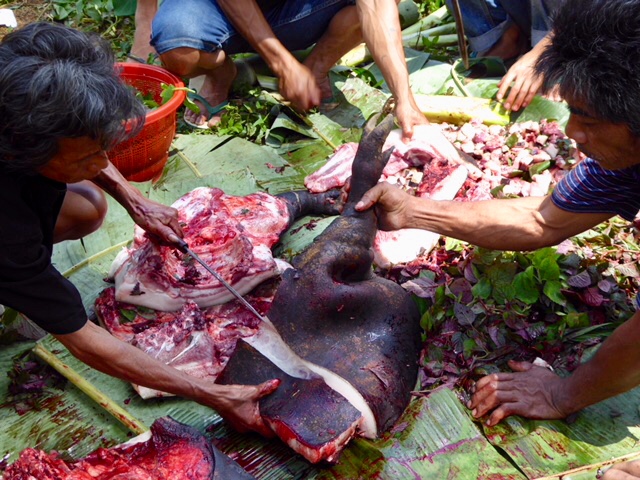
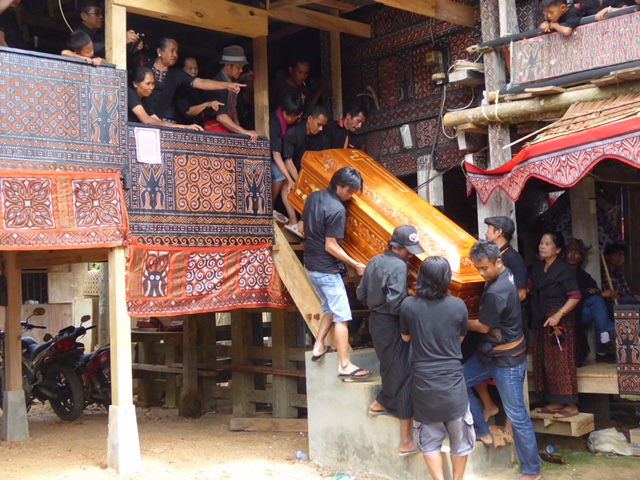
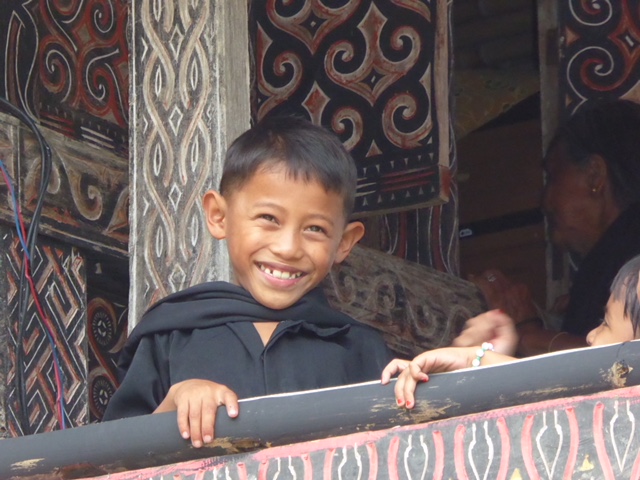

Somewhat surprisingly, part way through the events today passages from the Bible were read aloud. The Toraja religion is Aluk To Dolo (Way of the Ancestors). However 90% of people here also follow Christianity, as does this family.
The following slideshow shows a bit more of this very interesting day. (Double click to enlarge to be able to read the captions.)
Death does not mean Goodbye
The dead are not to be forgotten and the funeral is far from a final goodbye as regular exhumations bring the corpses back into family life.
A festival called ma’nene sees the family return to the ancestral tombs to “tidy up” and introduce new family members to their ancestors. The long dead bodies are taken out of their tombs and dressed in new clothes before being paraded around the village.
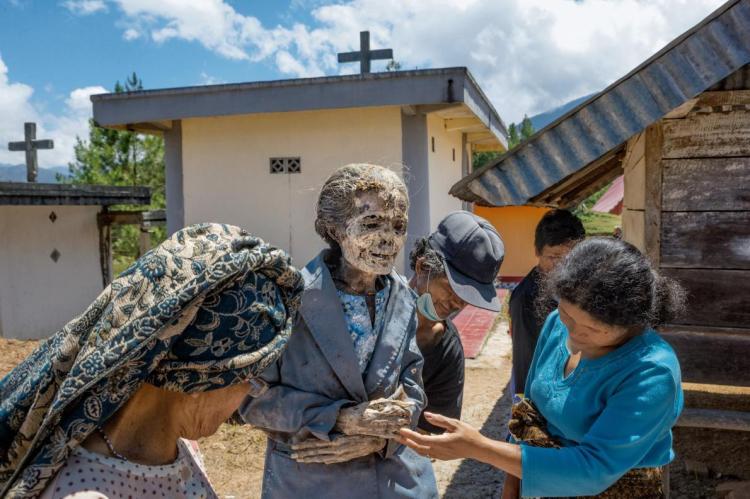
The “healthier” looking the corpse is, the belief is that better luck will be bestowed on their children and grandchildren. It’s not just the recently departed that are paraded like around the village either. All ancestors are part of the family and so it is completely normal to have family photos to include both the living and dead. I am told this ritual gives a sense of fulfiment for the living relatives to be able to connect with their ancestors of generations gone by.

The ma’nene festival happens every three years August, right in the middle of the funeral season. The family wear bright clothes for the celebrations and the new clothes for the deceased are in today’s fashions. When the bodies are returned back to their resting place, they go with gifts of food, drink and a plentiful supply of cigarettes.
Footnotes : Tourists are welcomed at Torajan funerals, as it is seen as a privilege to host a foreign visitor. However, guidelines must be followed to avoid offending. As all guests must be offered drinks and snacks, it is expected that a gift be given to the deceased family. Typical expectations from a tourist are 200 cigarettes or 5 litres of palm wine (much easier than a pig, as a local family would be expected to bring! ). The guests should wear dark colours. The biggest faux paux of all is to sit or stand in, or even in front of, any of the bamboo shelters which each are built for specific guests. You may be invited to a bamboo area, but otherwise, keep very mindful of blocking the view for any of the local people.
There is so much more to Torajan burial ceremonies, that I may have to write another post. Watch this space.
Photos of the ma’nene corpses are courtesy of Brian Lehmann.
Tana Toraja – Roofs and Rice..

Tana Toraja is one of those mystical places I had read about as a child.
 Accidental Nomads